Pricing guide
Well pump replacement cost in Butte County
A well pump replacement in this county runs roughly $1,500 to $3,000 on a typical valley well and $2,800 to $5,500 on a deep foothill well. Same pump. Same contractor. The difference is how far down the hole goes, and this page explains exactly why that is, so you can tell a fair quote from a bad one before you pick up the phone.
How much does it cost to replace a well pump?
Replacing a well pump costs $1,500 to $3,000 on a typical Butte County valley well and $2,800 to $5,500 on a deep foothill well, with a service call and diagnosis at $95 to $185 on top if the contractor has to find the fault first. Most people arrive here after being handed a number that felt like a lot, wanting to know whether they are being taken. Fair question. Here is the honest frame.
The pump itself is usually the smaller half of the bill. A submersible pump is a few hundred to about fifteen hundred dollars depending on horsepower and quality. Everything else you are paying for is the fact that it lives at the bottom of a deep hole full of water, and getting it out means hauling up every foot of pipe and wire attached to it.
That is why depth is the single biggest variable in the price, and why nobody can quote your well honestly over the phone without knowing roughly how deep it is. Expect depth to add about $500 to $1,000 per additional 100 feet.
Butte County price ranges
These are typical local ranges for planning. They are not quotes, and no honest contractor will give you a firm number without seeing the well.
| Job | Typical range | Notes |
|---|---|---|
| Service call and diagnosis | $95 to $185 | Usually credited toward the repair if you proceed |
| Pressure switch replacement | $150 to $350 | One of the most common real failures. Looks exactly like a dead pump |
| Pull and inspect a pump | $250 to $700 | Labor to get it up and diagnose. Deep wells at the top of the range |
| Pressure tank, during a pump job | $200 to $500 | Incremental cost while the contractor is already on site |
| Pressure tank, on its own | $800 to $3,900 | Depends heavily on tank size and plumbing condition |
| Submersible pump, well 100 to 200 ft | $1,500 to $3,000 | Typical valley floor: Oroville, Thermalito, Palermo, Gridley, Biggs |
| Submersible pump, well 300 to 400 ft | $2,800 to $5,500 | Typical foothills: Berry Creek, Forbestown, Concow, Paradise, Magalia |
| Each additional 100 ft of depth | $500 to $1,000 | Drop pipe, wire, and the labor to handle it |
| Well flow test | $200 to $400 | Measures what the well actually produces. Standard before buying |
| Labor rate | $45 to $150 per hour | After-hours and weekend emergency work runs higher |
Got a quote you want a second opinion on? Describe the well on the phone.
Why depth drives everything
Picture the job. Your pump is not a box bolted to a wall. It is a cylinder hanging at the bottom of your well, suspended on a column of pipe, with electrical wire strapped alongside it the whole way down.
To replace it, all of that has to come up. On a 150 foot valley well, that is 150 feet of pipe, the wire, the pump, and the water sitting inside the pipe. It is manageable, often in an afternoon.
On a 400 foot foothill well, it is 400 feet of the same, and the assembly can weigh several hundred pounds by the time it is moving. It needs a hoist, more setup, more time, and more care, because the failure mode is dropping the whole string back down the well. That does not just cost you the pump. It can cost you the well.
Then add material. Every extra foot is another foot of drop pipe you are buying and another foot of submersible wire, which is not cheap. Add deeper set requiring a stronger pump to lift water further, and the horsepower goes up with the depth.
None of that is markup. It is the job being genuinely bigger. This is the thing to understand before comparing your quote to a neighbor's.
Which side of the county are you on
Butte County splits almost perfectly on this, which is why the ranges above are grouped the way they are.
Valley floor. Oroville, Thermalito, Palermo, Gridley, Biggs. Alluvial ground, wells commonly 100 to 200 feet, decent yields, and a truck that can usually park near the wellhead. Bottom of the range.
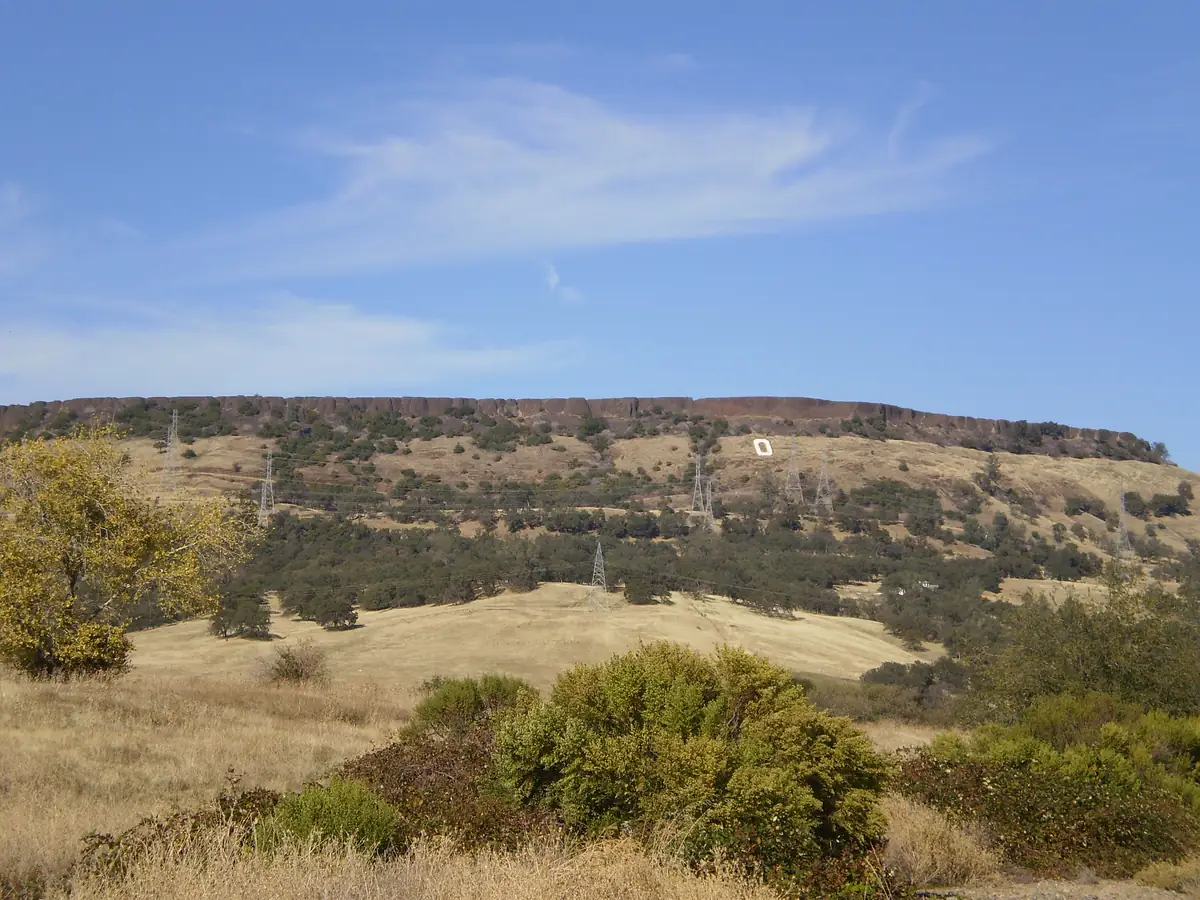
Foothills and ridge. Berry Creek, Forbestown, Concow, Paradise, Magalia. Hard rock, wells frequently 300 to 400 feet or deeper, lower yields, long steep gravel driveways, and sometimes a wellhead a good distance from anywhere a truck can sit. Top of the range.
If you do not know your depth, check your closing paperwork for a well completion report, and if there is nothing there, the state Department of Water Resources publishes a free Well Completion Report Map you can search by location. Failing both, the pull tells you.
What else moves the number
Whether it is actually the pump
This is the biggest single way to spend less. A dead pressure switch is $150 to $350. A waterlogged pressure tank is a few hundred. A tripped breaker is free. All three present exactly like a failed pump from inside the house, and a contractor who diagnoses before quoting can save you thousands. A contractor who quotes a pump replacement over the phone without seeing anything is guessing, at your expense. See the repair page.
Access
A wellhead the truck can back up to is a different job from one at the end of 400 feet of muddy gravel behind a locked gate. It rarely changes the price on its own, but it changes the time, and time is the bill. Mention it when you call.
What comes up with the pump
Once the pump is out, the contractor can see the rest. Corroded drop pipe, brittle wire, or a failed check valve are all cheap to replace while everything is already out of the ground and expensive to deal with later, because later means pulling it all again. Saying no to a $200 length of pipe today to pay $900 in labor next year is a bad trade, and a good contractor will explain it that way.
Sand
Sand is common in wells around here and it is a pump killer, chewing impellers until output drops off. If sand is what ended your last pump, replacing the pump alone gets you the same failure again. That is a conversation worth having rather than a line item.
After hours
No water is an emergency, so a lot of this work happens on a Saturday night. Expect to pay for that. If your house can genuinely wait until Tuesday, saying so on the phone usually saves real money.
Is a more expensive pump worth it?
Usually yes, and here is the reasoning rather than a sales pitch. The difference between a budget pump and a good one might be a few hundred dollars. The labor to install either one is identical, and on a deep foothill well that labor is most of the bill.
So if the cheap pump lasts 7 years and the good one lasts 15, you did not save money. You bought a second $3,000 pull. On a 150 foot valley well the math is closer, because the labor is lower. On a 400 foot well it is not close at all.
The same logic applies to the parts that go down the hole alongside it. Stainless where it matters, decent wire, and a proper check valve are cheap while everything is up. They are expensive the moment it is all back in the ground.
Cost questions
Why is my quote double what my neighbor paid?
Almost always depth. A neighbor on the valley floor with a 150 foot well and you in the foothills with a 400 foot well are not getting the same job, even though the box on the truck is identical. The other common answer is that one of you needed only a pressure switch and the other needed the pump. Ask the contractor to walk you through the depth and the parts and a real one will do it happily.
Is the service call free?
Rarely, and be a little cautious about anyone advertising that it is. Diagnosis runs $95 to $185 here and is typically credited toward the repair if you go ahead. A contractor driving to Berry Creek and back is spending real time, and "free" usually means it is in the price somewhere else.
Will insurance or a home warranty cover it?
Homeowners policies generally do not cover a pump that simply wore out, because that is maintenance rather than a sudden event. Some home warranty plans do cover well pumps, often with a cap well below what a deep foothill replacement costs. Read the cap, not the headline. This is not insurance advice and your policy is the authority.
Should I replace the pressure tank at the same time?
If the tank is old or waterlogged, yes, and the numbers make the case. It is $200 to $500 extra while the contractor is already there, against $800 to $3,900 as its own job later. A bad tank is also what kills pumps in the first place, so replacing the pump and leaving the tank is how you end up doing this again. See the pressure tank page.
Can I get a quote over the phone?
You can get a range, which is what this page is for. You cannot get a real number, because nobody knows what is in your well until it comes up. Anyone who commits to a firm price sight unseen is either padding it to cover the worst case or planning to revise it once they are standing at your wellhead.
Get connected with a licensed local pump contractor.