Service area
Well pump repair in Palermo, CA
The defining fact about Palermo pump work is not depth or access. It is paperwork, or rather the absence of it. These are rural parcels south of Oroville that have changed hands more than once, and on a lot of them nobody currently living there knows how deep the well goes or when the pump went in. You find out when it comes up. Call to get connected with a licensed local pump contractor.
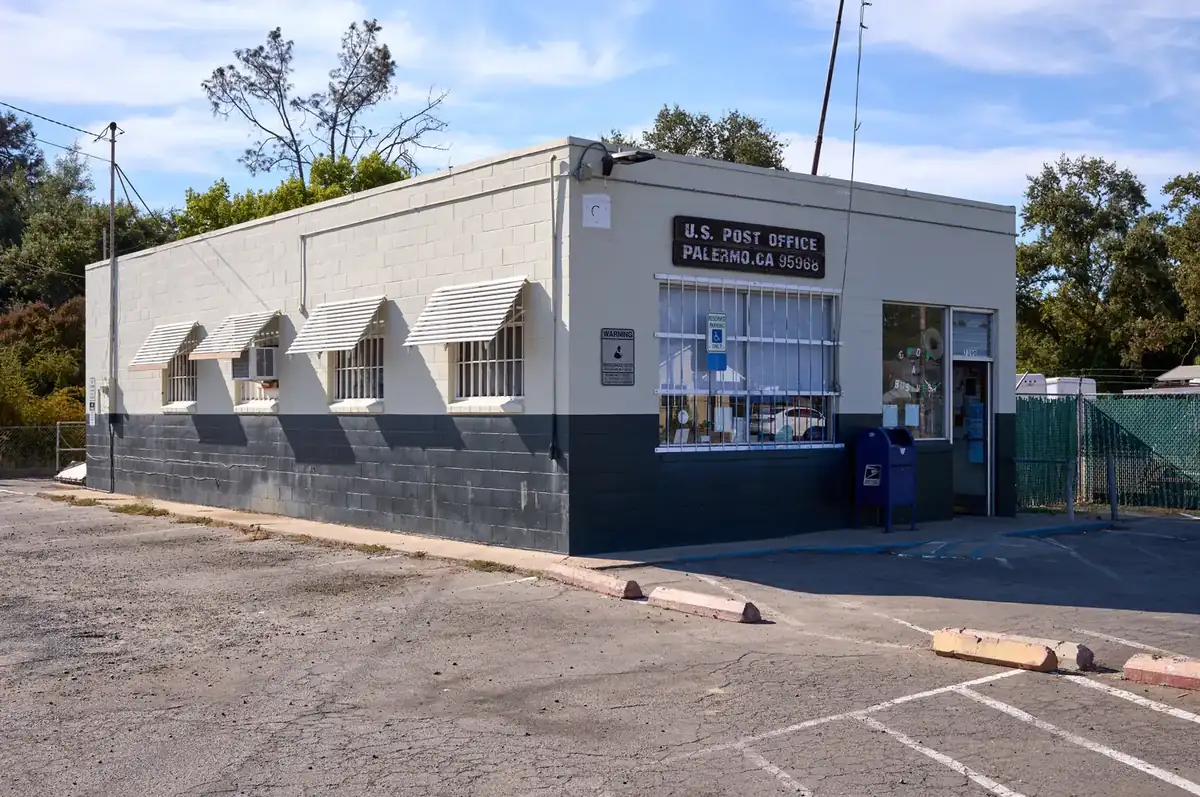
Nobody knows the depth until the pump comes up
This is normal here and it is not anybody's fault. Wells get drilled. Properties get sold. Records travel with the paperwork right up until one owner does not hand the folder to the next one, and then the number is simply gone. Two or three transactions later the well is a pipe in the ground that has always worked.
Before you assume there is no record, look. Well completion reports are filed with the state Department of Water Resources rather than the county, and DWR publishes them free through its Well Completion Report Map, searchable by location. Older wells are hit and miss, and a well that predates the filing requirement may never have had a report at all. If you find one, hang onto it. It is worth actual money to you every time this comes up.
If there is nothing, that is fine and the work still happens. It just changes how the day goes. A contractor loading the truck for a Palermo address is loading for a range rather than a number. You are on valley ground here, so the likely case is a well somewhere in the 100 to 200 foot band and a submersible replacement at $1,500 to $3,000. But "likely" is doing real work in that sentence, and if the well turns out deeper than expected, depth adds roughly $500 to $1,000 per additional 100 feet. That is drop pipe, wire, and labor, not a surprise fee. The cost page lays out how the number assembles.
The practical version: when you call, tell them you do not know the depth. Say it out loud. It is far better information than a guess, and a contractor who works this county would rather hear "no idea" than a confident number that turns out to be wrong at the wellhead.
Old wells come with old pumps
The other half of the same story. A submersible is good for something like 8 to 15 years. On a property that has turned over a couple of times, the pump is frequently well past that, and nobody knows because a pump gives almost no warning. It works, and then one morning it does not.
What often turns up when the assembly finally comes out of the ground is an education. Steel drop pipe from an era when that was the standard. Wire splices somebody made decades ago. A pump that is not the size anybody would choose for what this property does today. A check valve that quietly quit some time ago. None of that is anybody's failure. It is just what fifty year old infrastructure looks like when you finally get eyes on it.
This is the argument for doing the whole job once. The expensive part of a pump replacement is the pulling and lowering, and that cost is already paid the moment the assembly is out of the hole. Replacing tired drop pipe or a dying pressure tank while everything is up costs a fraction of what it costs to come back and do it as its own visit. A pressure tank replaced on its own runs $800 to $3,900. Handled during a pump job, it is $200 to $500 incremental. Same tank. The replacement page covers what goes back in.
No water this morning? Describe the symptom and get a straight answer.
The parcel is not just a house
Palermo lots are bigger than town lots, and that means the well is usually doing more than one job. A house, and then a shop or a barn on its own line. Animals with a trough that has to stay full. Trees or a garden that get watered through the dry months. Maybe a second dwelling.
That matters in two directions. Going up, it means demand on a well that was sized for whatever the property was decades ago, not what it is now. Going down, it means a pump failure here is worse than a pump failure in town. No water in a house is bad. No water when there are animals depending on it is a different kind of urgent, and it is worth saying so on the phone rather than being polite about it.
It also means the plumbing between the well and the buildings is long. Long runs to outbuildings develop their own problems, and a leak somewhere out on a line to a barn presents exactly like a pump problem: the pump runs and runs and never satisfies. Before anybody condemns a pump, that is worth ruling out.
The three free checks
Same as anywhere, and worth doing before you spend money.
Breaker. Double pole, 240 volt, and it can be tripped without looking tripped. Firmly off, then on. If it trips straight back, stop and call.
Gauge. If it reads zero and the pump is not running, that points at power, the switch, or the pump. If it reads normal pressure and no water reaches the house, the pump is doing its job and your problem is downstream.
Tank. Knock on it. Hollow up high, solid down low is healthy. Solid all the way up is waterlogged, which makes a good pump cycle itself to death. See the pressure tank page.
If all three look right, a diagnosis runs $95 to $185 and is usually credited toward the work. On a property where nobody knows what is down there, that visit is worth more than the money. It is the first honest information anyone has had about your well in years, and a flow test at $200 to $400 will tell you what it actually delivers rather than what you have assumed.
Nearby
The contractors we refer work north into Oroville, west across the flats to Thermalito, and south into the farm country around Gridley, plus the rural parcels scattered between them.
Get connected with a licensed local pump contractor.