Service area
Well pump repair in Berry Creek, CA
Berry Creek is the hardest pump work in Butte County, and it is not particularly close. Around 2,300 feet, deep hard rock wells, low yields, and driveways that decide what kind of day it is going to be. If you are up here, the number on your quote is going to be at the top of the county range, and this page explains exactly why. Call to get connected with a licensed local pump contractor.
What is actually under your property
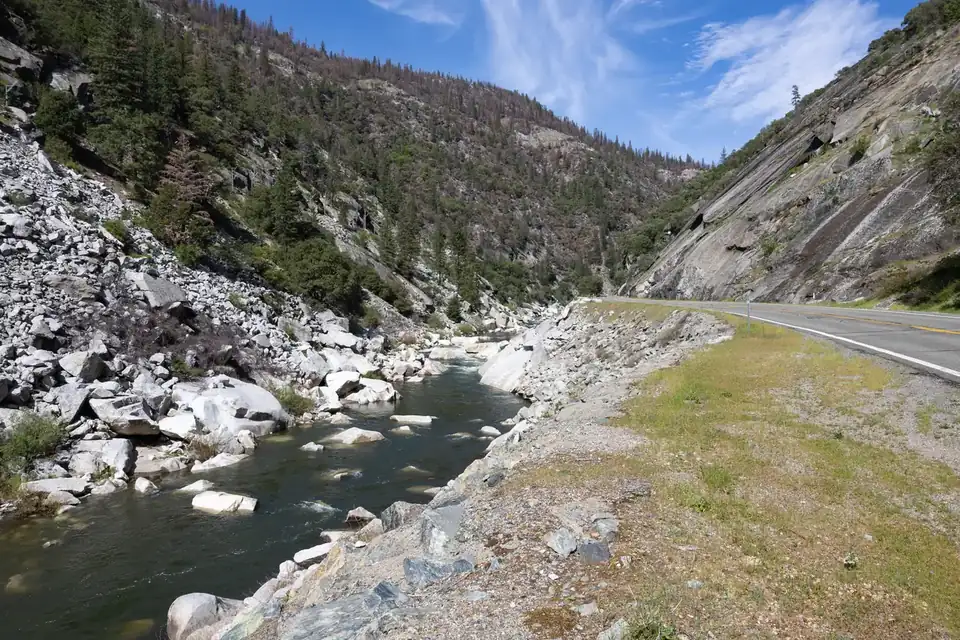
Down on the valley floor around Oroville and Thermalito, a well is a hole in gravel and sand. Water moves through that ground freely, so a driller finds what he needs at 100 to 200 feet and stops. Up here there is no alluvial aquifer. There is rock, and water lives in the cracks in the rock.
That changes everything about your well. A hard rock well does not tap a body of water, it intercepts fractures. If a driller hits a good seam at 240 feet, that is a good well. If he does not, he keeps going, which is why wells in this country routinely run 300 to 400 feet and sometimes considerably past that. The depth was not a choice anybody made. It was where the water was.
It also explains the yield. A fractured rock well often produces a few gallons a minute rather than the twenty or thirty a valley well might give up without complaining. That is livable, and people have lived on it up here for generations, but it means your well has less margin than most. It also means the pump is usually hanging deep and near the bottom, which matters enormously when it comes time to pull it.
What a 400 foot pull actually involves
This is worth understanding in physical terms, because it is the entire reason your quote reads the way it does.
Your submersible pump is not sitting in a pit near the house. It is hanging on the end of a column of pipe that runs from the wellhead down to somewhere near the bottom of the well, with the electrical cable strapped alongside it the whole way and a safety rope beside that. To touch the pump, all of it has to come out of the ground, in order, and go back in.
That column is heavy. Four hundred feet of drop pipe plus the wire plus the pump itself plus the water still standing inside the pipe adds up to several hundred pounds, and it does not come out in one piece. It comes out in lengths, each one lifted, unthreaded or unclamped, uncoupled from the wire, set aside, and stacked somewhere it will not get walked on. Then the same thing in reverse on the way back down, and it has to go back down clean and straight, because anything dropped goes to the bottom of a 400 foot hole and stays there.
That last part is why this is not a job to try yourself. A dropped column turns a pump replacement into a fishing operation, and a failed fishing operation turns it into a conversation about a new well. That is a different order of money entirely.
So when the price on a Berry Creek submersible replacement lands at $2,800 to $5,500 while a Thermalito neighbor paid $1,500 to $3,000 for the same pump in the same box, nothing about the part changed. The hole did. Depth adds roughly $500 to $1,000 for every additional 100 feet, and that is drop pipe, wire, and hours, not markup. The full breakdown is on the well pump replacement cost page.
Deep well, no water, and it is not the breaker? Describe it on the phone.
Access decides the day
The pull needs a truck at the wellhead. Not near it, at it. A pump hoist has to sit over the casing, which means the rig has to get up your driveway, turn around somewhere, and park on ground that will hold it.
Berry Creek driveways are long, gravel, often steep, and frequently built for a pickup rather than a loaded service truck. Add a wellhead a couple hundred feet from the road, or downhill from the house, or behind a gate nobody has opened since the last time, and the crew is solving that before any work begins. That time is real and it is on your bill.
None of it is a dealbreaker. This is normal work up here. But it is worth two minutes on the phone. Tell them how far the wellhead is from where a truck can park, what the driveway is like, and whether a full size service truck has made it up before. A crew that arrives knowing what it is walking into does the job in one trip.
Low yield, and the symptom people misread
Because these wells produce slowly, Berry Creek gets a particular call more than the valley does. The water runs fine for a while, then starts spitting air, then quits. A few hours later it is back to normal. Everyone reads that as a dying pump.
Often the pump is fine. The well simply cannot refill as fast as the house is drawing it down, so the pump runs the water level below itself and starts pulling air. That is a recovery problem, not a pump problem, and replacing a healthy pump does not fix it. It is worth diagnosing properly, because the answers are different: sometimes lowering the pump if there is well left below it, sometimes changing how the system draws, sometimes accepting what the well gives. A flow test runs $200 to $400 and tells you what you actually have rather than what you hope you have.
Running a pump dry is also how a good pump dies. Submersibles use the water around them for cooling. A pump that repeatedly gulps air is cooking itself, which is how a recovery problem quietly becomes a replacement a year later.
Before you call anyone
Three free checks, and up here they are worth more than usual because a wasted trip out to Berry Creek is a wasted afternoon. Push the double pole breaker firmly off and back on, since a tripped breaker does not always look tripped. Read the gauge at the pressure tank. And knock on the tank itself: hollow up top and solid down low is healthy, solid all the way up means it is waterlogged and cycling your pump to death.
If all three look right, a diagnosis runs $95 to $185 and is usually credited toward the work. A pressure switch, which fails far more often than pumps do, runs $150 to $350. Worth ruling out before anybody pulls 400 feet of pipe. More on the repair page.
Nearby
The contractors we refer work the same deep hard rock wells up on the ridge in Paradise and Magalia, and they run the shallower valley wells down in Oroville and the parcels along the way up.
Get connected with a licensed local pump contractor.